
Adjustable Dumbbells
A practical set of adjustable dumbbells (up to 20kg) that saves space and money for home strength training.
Choosing the right weight is the difference between a set you outgrow in a month and one that serves you for years. The key is to match the range to your current strength while leaving room to progress.
For general fitness and toning, a range up to around 10-15kg per dumbbell covers most exercises. For building muscle, aim higher: a top weight around 24-32kg per dumbbell gives room to progress on presses, rows and squats. The adjustable advantage is that one set covers light isolation work and heavier compounds, so you don't need separate pairs.
Strength improves quickly at first, so buy with headroom: pick a top weight a good step above what you can lift today. It's better to have a range you grow into than one you outgrow. Smaller increments (around 2.5kg) help you progress gradually, especially on smaller muscle groups like shoulders and arms.
A practical set of adjustable dumbbells (up to 20kg) that saves space and money for home strength training.

A practical set of adjustable dumbbells (up to 20kg) that saves space and money for home strength training.

A practical set of adjustable dumbbells (0.9-2.3kg) that saves space and money for home strength training.

A practical set of adjustable dumbbells that saves space and money for home strength training.

A practical set of adjustable dumbbells that saves space and money for home strength training.
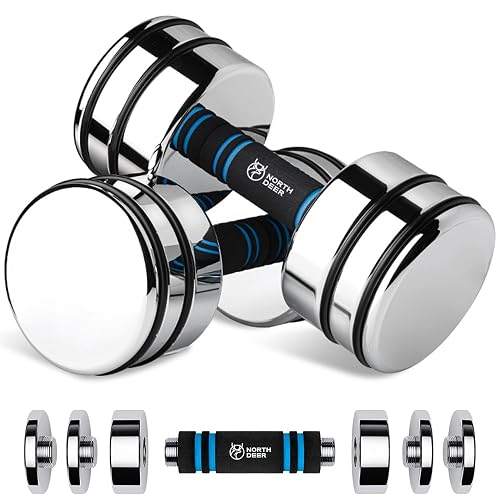
A practical set of adjustable dumbbells (up to 10kg) that saves space and money for home strength training.
It depends on the exercise and your strength. 20kg per dumbbell is challenging for shoulder presses or curls for most people, but lighter for rows or squats. A set that reaches 24kg or more gives room to progress across all of them.
An adjustable set that starts light (a few kg) and reaches around 20-24kg per dumbbell lets a beginner start comfortably and keep progressing without buying more weights.
Our top pick is the Adjustable Dumbbells (our score 9.6/10) - A practical set of adjustable dumbbells (up to 20kg) that saves space and money for home strength training..